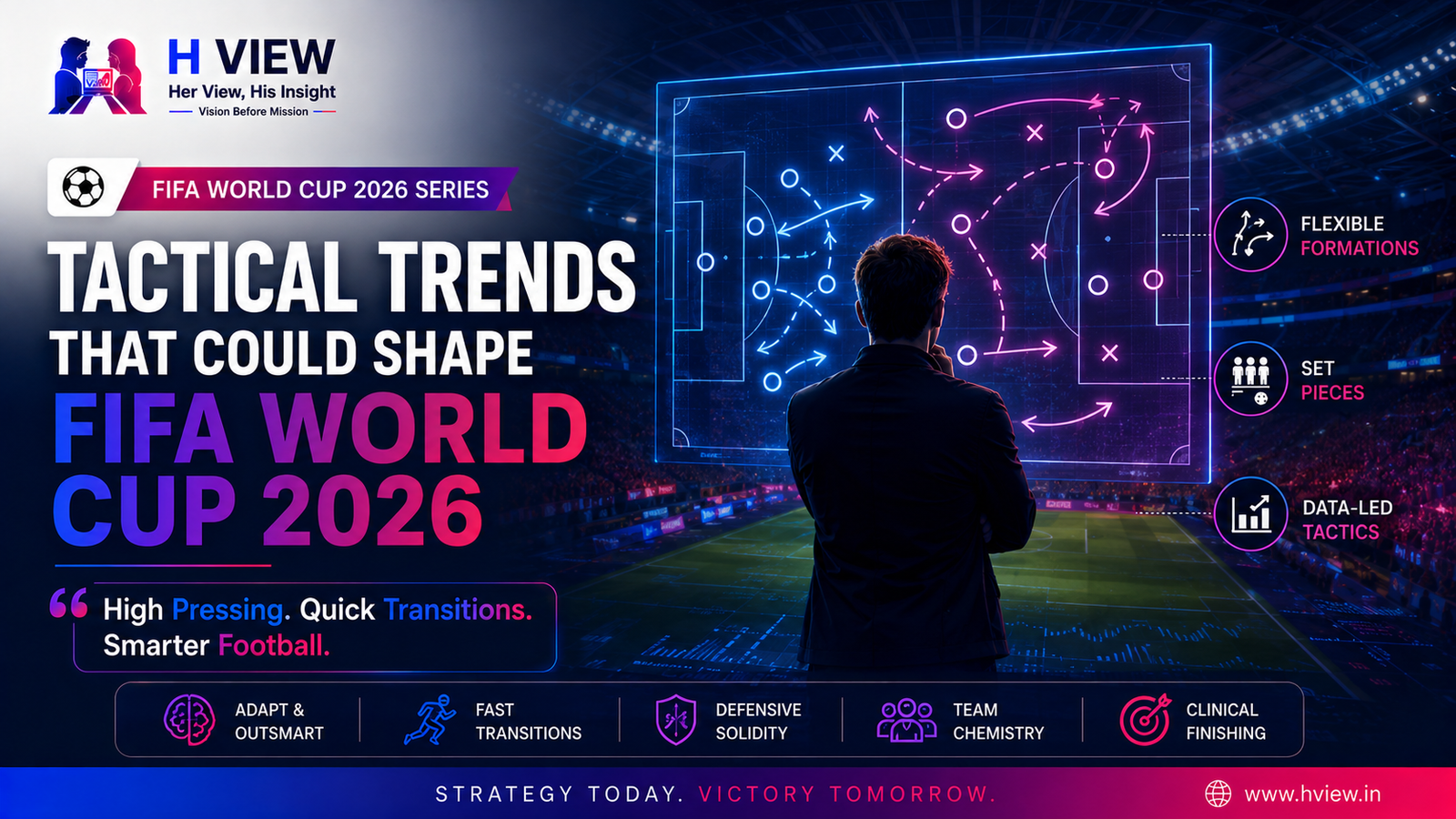
Tactical Trends That Could Shape FIFA World Cup 2026
The FIFA World Cup is not only a battle of players. It is also a battle of ideas. Every tournament reveals new tactical trends. Coaches study opponents, adjust formations, manage pressure, and make decisions that can define national history. FIFA World Cup 2026 could become one o
The FIFA World Cup is not only a battle of players.
It is also a battle of ideas.
Every tournament reveals new tactical trends. Coaches study opponents, adjust formations, manage pressure, and make decisions that can define national history.
FIFA World Cup 2026 could become one of the most tactically interesting tournaments ever.
High Pressing
High pressing has become a major feature of modern football.
Teams try to win the ball quickly near the opponent’s goal. This creates chances and forces mistakes.
But pressing requires fitness, coordination, and discipline. If one player reacts late, the whole system can break.
At the World Cup, where players come from different clubs and have limited preparation time, pressing must be carefully planned.
Quick Transitions
Modern football is often decided in transition moments.
When a team wins the ball, it can attack quickly before the opponent reorganizes. Fast wingers, creative midfielders, and intelligent forwards can make transitions deadly.
Teams with speed and direct attacking ability may become dangerous in knockout matches.
Flexible Formations
Formations are no longer fixed.
A team may defend in one shape and attack in another. Full-backs may move into midfield. Midfielders may drop into defense. Wingers may become inside forwards.
This tactical flexibility can confuse opponents and create space.
The best teams in 2026 may be those that can change plans during the match.
Possession With Purpose
Keeping the ball is useful, but possession without purpose can become slow.
Successful teams use possession to control the game, move opponents, and create openings.
The challenge is balancing patience with speed.
Fans should watch teams that use the ball intelligently rather than simply keeping it for statistics.
Set-Piece Importance
World Cup matches are often tight.
In such games, set pieces can decide everything. Corners, free kicks, penalties, and throw-in routines can create goals when open play becomes difficult.
Teams with strong set-piece planning may have a big advantage.
Data-Led Preparation
Coaches now use data to study opponents in detail.
They analyze passing zones, pressing triggers, defensive weaknesses, player habits, and set-piece patterns.
This makes preparation more scientific, but execution still depends on players.
H View Perspective
Football tactics are becoming smarter, but the best teams are not always the most complicated.
World Cup football rewards clarity.
A team must know when to press, when to hold, when to attack, and when to stay calm.
Tactics matter. But courage, discipline, and decision-making under pressure matter just as much.
FAQs
High pressing, quick transitions, flexible formations, possession play, and set pieces may be important.
They can decide close matches, especially in knockout rounds.
Most top teams now use data for preparation and analysis.
Good tactics can reduce the gap, but elite talent can still decide big moments.
Final Takeaway
FIFA World Cup 2026 will be a tournament of strategy as much as skill.
Fans should watch not only the goals but also the patterns, pressing, formations, and decisions behind them.